

Energy’s Game of Thrones
📊 MARKET ANALYSIS
Energy's Game of Thrones: Power Plays in the 2025 Energy Kingdom
Date:September 18, 2025
Reading Time:12 minutes
🔋 Executive Summary
KEY TAKEAWAYS:
The energy sector in 2025 mirrors a high-stakes medieval drama with traditional oil majors defending their kingdoms while renewable energy challengers mount an aggressive assault.
Renewable investments have reportedly reached $800 billion in 2025, while traditional energy capex declined to $400 billion, potentially marking a historic inflection point.
Nuclear energy may be experiencing an unexpected renaissance with reported 63% public support, up from 43% in 2020.
Financial discipline appears to create a two-tier market where companies with debt-to-EBITDA below 1.5x may enjoy 25-40% valuation premiums.
Introduction: Winter Is Here for Traditional Energy
In 2025's energy markets, winter isn't coming—it's here. And only the strongest houses will survive. Welcome to the real-life Game of Thrones, where instead of Lannisters and Starks, oil majors and renewable disruptors battle for the energy kingdom.
This comprehensive market analysis breaks down the complex state of play in today's energy sector investment opportunities. We'll explore which companies may claim the Iron Throne, emerging wild cards, the influence of "the Iron Bank" (capital markets), and the risks that might spark a Red Wedding in the energy markets. Understanding these power dynamics and energy transition portfolio management strategies could be crucial for investors. For foundational concepts, consider reviewing ourABCs of Stock Market Investing guide.
⚔️ The Great Energy War: Traditional vs. Renewable Investment (2020-2025)
The Shifting Balance of Power
As the Great Houses of energy resources shift their armies, new titans may be crowned while old empires potentially wane. Current renewable energy portfolio allocation strategies suggest a surge in clean energy investments, while traditional fossil fuel investments face strategic retrenchment.
The Great Houses: Traditional Energy's Fight For Relevance
Oil and Gas Investment Analysis 2025
Formerly untouchable, oil & gas majors are locked in what some analysts view as an existential struggle. European majors now reportedly funnel an average of 33–35% of capex to renewables, green hydrogen, and carbon capture projects[1]. Shell has reportedly doubled its renewable operating portfolio since 2020.
*Past performance does not guarantee future results. All investments involve risk of loss.
"Financial discipline is the new moat. The era of overleveraged energy giants is over."—Ewa Malz, Fitch Ratings, 2025
⚔️ Houses of Energy: Market Share Conquest 2025
Understanding the Energy Sector Market Outlook September 2025
The current market share distribution potentially reflects a kingdom in transition. Renewable energy's growing dominance may reshape investment strategies for years to come.
🐉 The Dragon Riders: Renewable Energy's Airborne Assault
Solar and wind continue their market expansion. Utility-scale solar costs—now reportedly under $0.06/kWh—have fallen more than 60% since 2015[4].
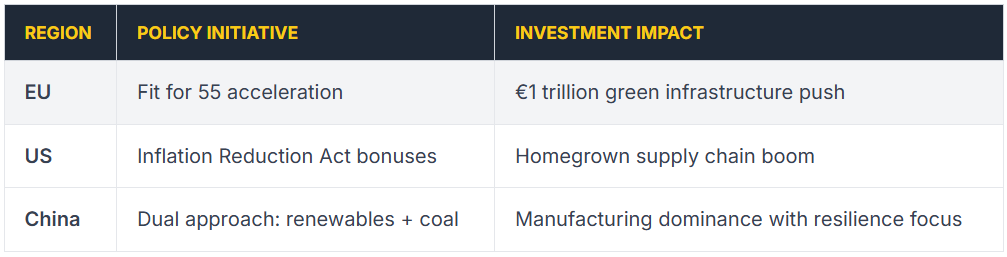
Policy & Geopolitics in Energy Infrastructure Funds
🏰 The Night's Watch Returns: Nuclear Energy Investment Renaissance
Like the Night's Watch—exiled but quietly powerful—nuclear energy investment opportunities have potentially returned from the policy wilderness. The first U.S. and Canadian small modular reactors (SMRs) reportedly started commercial operations in late 2024. 2025 polling suggests 63% of Americans may now support nuclear, up from 43% in 2020[7].
💡 Investment Strategy Note
Emerging technologies in energy represent both opportunities and risks. Consider how these innovations might fit within your overall energy transition portfolio management approach. Diversification across traditional and emerging energy sectors may help manage volatility.
⚡ Looking Ahead: Investment Strategy Considerations
The energy Game of Thrones will likely rage for years. The most successful investors might be those who recognize that the transition could be both inevitable and unpredictable. Consider these factors for energy sector investment opportunities:
Diversification:Balance across traditional and renewable sectors
Financial Health:Focus on companies with strong balance sheets
Technology Exposure:Consider emerging technologies like hydrogen and storage
Geographic Spread:Global energy transition creates regional opportunities
Risk Management:Hedge against volatility with varied investment vehicles
*These are general educational observations, not personalized investment advice. Consult with a qualified advisor for strategies tailored to your situation.
Get Personalized Energy Sector Investment Guidance
Understanding market trends is just the beginning. Discover how current energy sector conditions could affect your specific portfolio and investment goals.
Call us at (214) 983-0346 for immediate assistance
Important Disclaimers
IMPORTANT DISCLAIMER:The information provided in this content is for educational and informational purposes only and does not constitute financial, investment, tax, or legal advice. It should not be construed as a solicitation or offer to buy or sell any securities or investment products.
Investment Risk Disclosure:Past performance is not indicative of future results. Investing involves risk, including the possible loss of principal. The energy sector is subject to unique risks including commodity price volatility, regulatory changes, and geopolitical factors.
Personalized Investment Planning:We invite you to schedule a comprehensive, no-obligation consultation with one of our licensed portfolio managers. Contact us at (214) 983-0346 or visit our website to arrange your personal financial strategy session.
CONTENT DEVELOPMENT NOTE:This article was prepared with the assistance of AI technology for research and initial drafting, with comprehensive review, fact-checking, and editing by Vann Equity Management staff. All data and investment insights have been verified by our team of licensed professionals.
Sources & References
All data and statistics cited in this article have been compiled from the following sources:
BP, Shell, and TotalEnergies renewable investment data. Sources:TotalEnergies Energy Outlook 2024;Energy Monitor Analysis 2024
Chevron renewable energy spending and strategy. Sources:Oil & Gas Journal - Majors Capital Spending Survey 2025;Chevron New Energies
Global LNG investment data. Sources:Rystad Energy LNG Investment Report 2024;QatarEnergy Annual Review;Cheniere Q4 2024 Results
Solar cost reduction data. Sources:IRENA Global Solar LCOE Report 2024;Lazard LCOE Analysis 2025;Lawrence Berkeley National Laboratory Utility-Scale Solar Report
Battery storage market data. Sources:BloombergNEF Battery Storage Report 2025
Nuclear power expansion data. Sources:World Nuclear Association 2025
Public opinion on nuclear power. Sources:Pew Research Center Nuclear Support Poll 2024;Bisconti Research National Nuclear Energy Public Opinion Survey 2025;Gallup Nuclear Energy Poll 2025
Hydrogen initiatives. Sources: Industry reports and company announcements 2024-2025
Carbon capture investments. Sources:ExxonMobil Low Carbon Solutions Plans 2025; Occidental Petroleum CCS project announcements
AI in energy sector. Sources: BP and National Grid digitalization reports 2025
Climate adaptation bonds. Sources: EU Climate Finance Reports 2025
Electric vehicle market share. Sources:IEA Global EV Outlook 2025;BloombergNEF Electric Vehicle Outlook 2025;Varta Global Electric Vehicle Market Report 2025
ConocoPhillips/Pioneer merger. Sources:Offshore Energy Q1 2025 Earnings Report; Company press releases
For fact-checking and additional information:
All sources listed above are active links as of September 18, 2025. For additional verification of data and statistics, please refer to the original source documents. Information presented represents market analysis and should not be considered investment advice.
